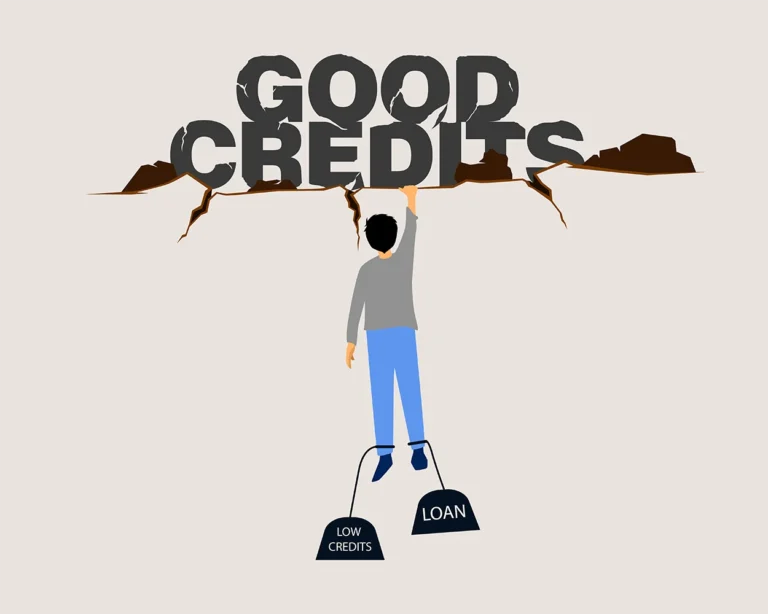
Getting denied for a mortgage, car loan, or small business line of credit because of a low score is one of the most frustrating financial experiences you can go through. You know you can handle the payments, but the numbers on your credit report say otherwise. The good news is that credit building in 2026 is more structured and accessible than ever before. Whether you are starting from zero or recovering from past setbacks, following a clear, proven process gives you real results. This guide walks you through every step, from the documents you need to the habits that move the needle fast.
Table of Contents
- What you need before you start building credit
- Step-by-step credit building process for 2026
- Troubleshooting and common mistakes to avoid
- How to monitor your credit progress and know you’re on track
- What most guides miss: the power of proactive payment habits
- Next steps: get expert support on your credit journey
- Frequently asked questions
Key Takeaways
| Point | Details |
|---|---|
| Preparation pays off | Getting documents and accounts in order is essential for a smooth credit building process in 2026. |
| Separate credit matters | Keep personal and business credit completely separate for maximum effectiveness and transparency. |
| On-time and early payments | Always pay bills on or before due dates to boost your credit score faster, especially in 2026. |
| Monitor your progress | Check your credit reports regularly to catch issues early and ensure your efforts are working. |
| Learn from mistakes | Avoiding common credit mistakes can save you months of setbacks on your credit journey. |
What you need before you start building credit
Before you can build anything solid, you need the right foundation. Think of it like building a house. You would not pour concrete before clearing the lot. Credit is exactly the same way.
For individuals, the starting checklist is straightforward:
- A valid Social Security Number (SSN)
- A government-issued photo ID (driver’s license or passport)
- An active checking or savings account at a bank or credit union
- A stable mailing address for account statements and credit bureau correspondence
For small business owners, the list goes a step further. You need to treat your business as its own financial identity, completely separate from your personal finances. This distinction matters enormously for long-term credit health. You can read more about how to build business credit on our dedicated resources page.
The table below lays out the key requirements side by side:
| Requirement | Individual | Small Business Owner |
|---|---|---|
| Tax ID | SSN | EIN (Employer Identification Number) |
| Legal entity | Not required | LLC, corporation, or partnership |
| Bank account | Personal checking/savings | Dedicated business bank account |
| Credit bureau registration | Equifax, Experian, TransUnion | Dun & Bradstreet (D&B), Equifax Business, Experian Business |
| Starting credit products | Secured card, credit-builder loan | Net-30 vendor accounts, business credit card |
One step many small business owners skip is registering for a Dun & Bradstreet (D&B) DUNS number. This free identifier acts as your business credit fingerprint. Without it, your vendor payment activity may go unrecorded, which means you are building nothing. According to SBA guidance on business credit, business credit is built by creating a separate business identity through a legal entity and EIN, then generating tradelines that report to business credit bureaus, with a strong emphasis on on-time or early payment history.
Getting your documents organized before you apply for anything saves weeks of frustration. Create a single folder, physical or digital, containing your ID, tax documents, business formation papers, and banking information.

Pro Tip: Before applying for your first credit product, run a free credit check at AnnualCreditReport.com. If you already have accounts you forgot about or errors on your file, you want to know that before you start, not after. This is especially relevant if you are working on building credit history for the very first time.
Step-by-step credit building process for 2026
Once all prerequisites are in order, it is time to walk through the actual steps to build or rebuild your credit. The process differs slightly depending on whether you are building personal credit or business credit, but the core principle is identical: create accounts, use them responsibly, and pay consistently.
For individuals: the personal credit building sequence
-
Open a secured credit card or credit-builder loan. A secured card requires a refundable deposit, usually between $200 and $500, which becomes your credit limit. Many credit unions offer credit-builder loans specifically designed for people with thin or no credit files. Both products report your payment activity to the three major consumer bureaus.
-
Make small purchases each month. Use your secured card for one or two recurring expenses, like a streaming subscription or a utility bill. Keeping your balance below 30% of your credit limit is the rule of thumb, but under 10% is even better for your score. This habit directly impacts your credit utilization ratio, which is the second biggest factor in your FICO score after payment history.
-
Pay on time, every time. Set up autopay for at least the minimum payment so you never miss a due date. If possible, pay the full balance each month to avoid interest charges.
-
Add a mix of credit types over time. Once your score reaches the mid-600s, consider adding a small personal loan or a retail store card to diversify your credit profile. Lenders like to see that you can manage multiple types of credit responsibly.
-
Avoid applying for too many new accounts at once. Each hard inquiry can temporarily lower your score by a few points. Space out new applications by at least six months.
For small business owners: the business credit building sequence
-
Form your legal entity. Register as an LLC, S-Corp, or C-Corp in your state. This separates your business from you as an individual.
-
Apply for an EIN. Your Employer Identification Number is your business’s Social Security Number. Get it free from the IRS at IRS.gov.
-
Open a dedicated business bank account. Use it exclusively for business transactions. Mixing personal and business finances is one of the most damaging mistakes a small business owner can make.
-
Register with Dun & Bradstreet and business credit bureaus. Get your DUNS number and make sure your business information is accurate and consistent across all platforms.
-
Establish vendor accounts with Net-30 terms. Apply for accounts at suppliers who offer Net-30 payment terms and report to business credit bureaus. Companies like Quill, Uline, and Grainger are common starting points. Pay these invoices early, not just on time. The SBA confirms that on-time or early payments through reporting vendors is the core of building a strong business credit file.
-
Apply for a business credit card. After three to six months of vendor tradelines, you become eligible for a business credit card. Use it for regular expenses and pay it off monthly.
-
Monitor your business credit reports regularly. Check Dun & Bradstreet, Equifax Business, and Experian Business every 30 to 60 days.
Explore additional credit building strategies that can help you accelerate results even further.
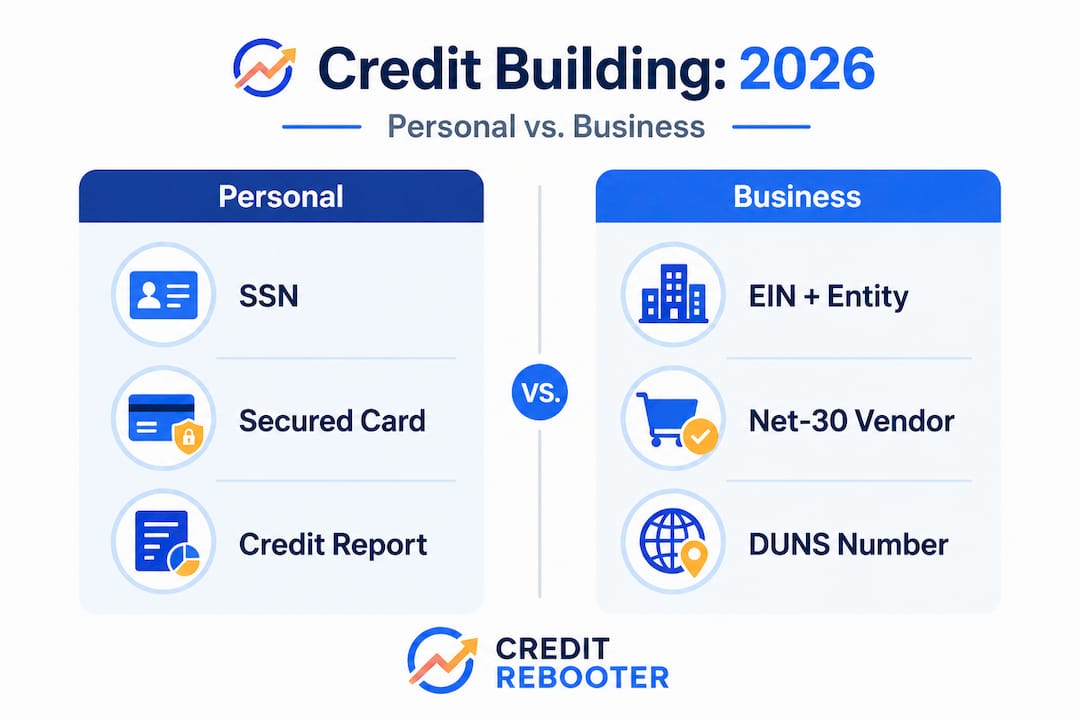
Comparison: personal vs. business credit building
| Step | Personal credit | Business credit |
|---|---|---|
| Identity | SSN | EIN + legal entity |
| First account | Secured credit card | Net-30 vendor account |
| Key metric | Payment history, utilization | Paydex score, payment history |
| Reporting bureaus | Equifax, Experian, TransUnion | D&B, Equifax Business, Experian Business |
| Timeline to first score | 3 to 6 months | 3 to 6 months |
| Key habit | Pay on time, stay under 30% utilization | Pay early, use reporting vendors |
Pro Tip: Net-30 vendors are your fastest route to a business credit score. Some, like Crown Office Supplies, will extend Net-30 terms to brand-new businesses with zero history. Three to five active Net-30 accounts reporting on-time payments can generate your first Paydex score in as little as 60 days. Check out credit building ideas for more creative ways to diversify your tradelines quickly.
Troubleshooting and common mistakes to avoid
As you work through the previous steps, be aware of pitfalls that can threaten your progress. Many people start strong and then unknowingly undo their work with a few avoidable errors.
The five most common credit building mistakes:
- Missing a single payment. One missed payment can drop your score by 60 to 110 points and stays on your report for seven years. There is no faster way to derail your progress.
- Maxing out your credit card. High utilization signals financial stress to lenders, even if you pay on time. Always keep balances well below your limit.
- Applying for multiple accounts in a short window. Several hard inquiries in a short period can make you look desperate for credit, which lenders view as risky behavior.
- Not monitoring your credit reports for errors. Studies show that roughly one in five credit reports contains errors that could lower your score. Errors do not fix themselves.
- Mixing personal and business finances. For small business owners, this single mistake can destroy two credit profiles at once and create serious tax complications.
Critical note: Late payments are the single biggest threat to your credit building progress. A payment that is even 30 days late gets reported to the bureaus and can follow you for years. According to the SBA, maintaining a strong payment record and keeping credit accounts linked to your correct legal entities are essential for both personal and business credit health.
If you do stumble early, do not panic. The key is to stop the bleeding immediately and then let positive history accumulate. Pay everything current, dispute any legitimate errors in writing, and give it time. For more structured help with recovery, our page on how to repair and build credit walks you through the recovery process in detail.
Knowing when to ask for professional guidance is also smart, not a sign of failure. If your credit file has collections, charge-offs, or judgments, a credit repair specialist can often resolve those faster than going it alone.
How to monitor your credit progress and know you’re on track
Knowing how you are doing is vital. Monitoring is not something you do once and forget. It is an ongoing habit that gives you early warning when something goes wrong and confirmation when things are going right.
For individuals:
- Check your personal credit reports from all three bureaus at least once every four months. Stagger them across the year so you are effectively reviewing your file three times annually.
- Use free tools like Credit Karma or your bank’s built-in credit monitoring feature to track score changes weekly.
- Sign up for email or text alerts whenever a new account, inquiry, or late payment is added to your file.
For small business owners:
- Review your Dun & Bradstreet Paydex score monthly during your first year of building. According to SBA guidance, registering for a D&B number gives you the ability to monitor credit activity as vendors report your payment behavior.
- Pull reports from Equifax Business and Experian Business quarterly.
- Watch for inconsistencies in your business name, address, and EIN across all accounts, since discrepancies can stall your score growth.
Signs you are genuinely making progress:
- New accounts appear on your report within 30 to 60 days of opening them
- Your credit utilization ratio is dropping
- Your score increases by 10 to 30 points within three months of consistent payments
- Lenders start sending you pre-approval offers
Pro Tip: Set a calendar reminder on the first of each month to log into your credit monitoring tools. Treating credit monitoring like a monthly bill review keeps you accountable and catches problems before they become disasters. If you want a full action plan for score growth, our guide on how to improve your credit score gives you a detailed roadmap.
What most guides miss: the power of proactive payment habits
Most credit building guides stop at “pay on time.” That advice is correct, but in 2026, it is the floor, not the ceiling. The lenders and algorithms that evaluate your credit today are far more sophisticated than they were even five years ago.
Here is what we have observed working with individuals and small business owners over time: the ones who make genuine leaps in their scores within six months are not just paying on time. They are paying early, sometimes seven to ten days before the due date, and doing it every single billing cycle without exception.
Why does this matter? Modern lender algorithms increasingly look at payment patterns, not just payment history. A file that shows consistent early payments signals low risk in a way that a file with last-minute on-time payments simply does not. For business credit in particular, the Paydex score from Dun & Bradstreet gives you a perfect 100 if you pay early. Paying exactly on time only gets you an 80. That 20-point gap can be the difference between getting approved for a business line of credit and being declined.
We have heard from small business owners who jumped their Paydex score from 70 to 90 within 90 days simply by shifting from on-time payments to early payments with their Net-30 vendors. No new accounts. No strategy shifts. Just earlier payments.
The SBA confirms that on-time or early payment history is more important than ever for both personal and business credit in 2026. Set up automatic payments that trigger five to seven days before the due date. If you use bill pay through your bank, schedule payments the day the invoice arrives. This one habit, applied consistently, puts you ahead of the vast majority of credit builders who are only meeting the baseline.
For more tips for improving credit scores based on practical, real-world experience, bookmark that resource and revisit it as your credit profile grows.
Next steps: get expert support on your credit journey
Building credit on your own is absolutely possible, and this guide gives you a clear process to follow. But sometimes, you need more than a guide.
At Credit Rebooter, we specialize in helping individuals and small business owners cut through the confusion and start seeing real results faster. Whether you are just beginning and need a deeper look at credit building strategies or you are focused on creating a solid building credit history from scratch, our platform gives you the tools, resources, and personalized support to make it happen. We offer free educational resources, step-by-step guidance, and one-on-one credit assistance designed for people who are serious about reaching their financial goals. If you are ready to buy a home, secure a business loan, or finally qualify for better rates, the next step is getting expert eyes on your specific situation.
Frequently asked questions
Can I start building credit in 2026 with no credit history?
Yes, you can begin building credit from scratch by opening starter accounts like secured credit cards and making consistent on-time payments. Even with no prior history, on-time payments can establish a credit file within three to six months.
What is the quickest way to build business credit in 2026?
The fastest path is to form your legal business entity, get an EIN, open a business bank account, and establish tradelines with Net-30 vendors that report to credit bureaus. The SBA confirms that using reporting vendors and a legal entity is the foundation of rapid business credit building.
How soon will I see credit score improvements with consistent payments?
Most people start seeing positive results on their credit reports within three to six months of making consistent, on-time payments and keeping their balances low.
Is there a difference between building personal and business credit?
Yes, personal credit relies on your SSN and reports to consumer bureaus, while business credit uses an EIN and reports to business bureaus like Dun & Bradstreet and Equifax Business. The scoring models and products used are also entirely different.
Do late payments affect both personal and business scores in 2026?
Absolutely. Late payments are damaging to both personal and business credit scores and can remain on your report for up to seven years, making on-time payment habits critically important from day one.