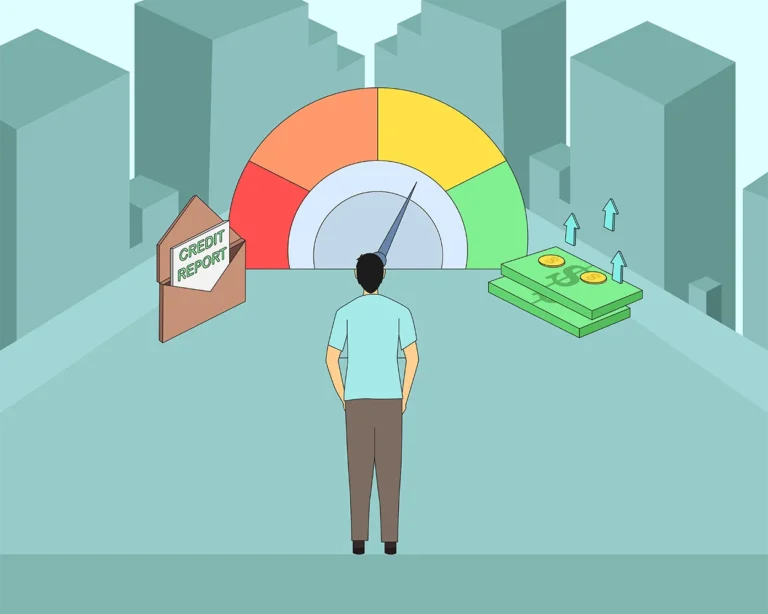
You put in the work. You pay your bills on time, stop applying for new cards, and watch your spending. Then you check your score a month later and see it barely moved. The frustration of slow credit improvement is one of the most common complaints in personal finance, and it’s often rooted in a simple misunderstanding of how credit scoring actually works. Why credit improvement takes time is not an accident of bureaucracy. It’s a deliberate feature of a system built to measure long-term financial behavior, not short-term effort.
Table of Contents
- Key Takeaways
- Why credit improvement takes time
- How long credit improvement actually takes
- Mistakes that slow your credit repair timeline
- Steps that accelerate credit score improvement
- How major negative events change your recovery timeline
- My take on patience in credit rebuilding
- Start your credit recovery with the right support
- FAQ
Key Takeaways
| Point | Details |
|---|---|
| Quick wins exist but are limited | Reducing utilization can lift scores 20-50 points in 30 days, but bigger gains take 6-12 months minimum. |
| Two factors drive most of your score | Payment history and credit utilization together make up 65% of your score, so focus there first. |
| Negative marks extend your timeline | Late payments stay on your report for seven years and significantly slow the credit repair timeline. |
| Common mistakes reset your progress | Closing old accounts, missing a payment, or opening too many accounts at once can undo months of work. |
| Patience is not optional | Credit score rebuilding rewards consistency over months and years, not quick fixes or shortcuts. |
Why credit improvement takes time
Credit scores do not measure who you are right now. They measure who you have been over an extended period. Scoring algorithms prioritize steady, long-term positive credit behavior because lenders need proof of sustained financial stability, not a single good month.
Your score is built from five distinct components, each with its own pace of change:
- Payment history (35%): Whether you pay on time, every time. This is the single biggest factor and also the one most immediately damaged by a missed payment.
- Credit utilization (30%): How much of your available credit you are using across all accounts. This can shift quickly when you pay down balances.
- Length of credit history (15%): The age of your oldest account, newest account, and the average age of all accounts. This one only improves with time.
- Credit mix (10%): Whether you have a variety of credit types, such as credit cards, installment loans, and auto loans.
- New credit inquiries (10%): Recent applications for credit, each of which temporarily lowers your score.
Together, payment history and utilization account for 65% of your overall score. That means your fastest path to improvement runs directly through those two factors. But credit age and mix? Those only change with time. You cannot fake a 10-year-old account into existence.
Pro Tip: Check your credit report at all three bureaus before doing anything else. You may be losing points to errors you can dispute and remove, which is one of the fastest wins available to you. Start at Creditrebooter’s guide on understanding your credit files.
How long credit improvement actually takes
Here is where expectations and reality often diverge sharply. Most people assume that two or three months of good behavior will produce a meaningfully better score. Sometimes it does. Most of the time, it does not.
The honest answer is that your starting point matters as much as your actions. If you are sitting in the 500s with multiple late payments and high balances, you are looking at a longer road than someone starting at 620 with one or two minor dings.
| Starting Situation | Expected Timeline | What Drives the Improvement |
|---|---|---|
| High utilization only | 30-45 days | Pay down balances below 30% of your credit limit |
| Minor errors on report | 30-60 days after dispute | Dispute inaccuracies and have them removed |
| Poor to fair credit (500s to 600s) | 6-12 months | Consistent on-time payments and reduced balances |
| Fair to good credit (600s to 700s) | 12-24 months | Long-term payment history and aging accounts |
| Recovering from bankruptcy | 2-7 years | Sustained positive behavior after the event |
Reducing utilization can boost scores by 20 to 50 points within 30 days. That is a real, tangible win. But moving from a 520 to a 640 requires 6 to 12 months of consistent, positive behavior across multiple factors. There is no shortcut for that kind of improvement.

One often-overlooked option for faster early gains: becoming an authorized user on a family member’s old credit card with a perfect payment record can add 15-30 points within 30 to 60 days, without you needing to do anything beyond being added to the account.
Pro Tip: Do not judge your progress by checking your score every week. Pull it monthly, at the same point in your billing cycle, so you are comparing apples to apples. Score fluctuation within a billing cycle is normal and does not reflect your real trend.
Mistakes that slow your credit repair timeline
Understanding what helps your score is only half the equation. Knowing what quietly pulls it back down is just as critical. Several common behaviors stall credit score rebuilding, and many people do not realize they are doing them.
- Missing even one payment after you have started improving. A new late payment resets progress because recent negative information is weighted more heavily than older positive history. One missed payment can undo several months of consistent effort in a matter of days.
- Carrying high balances through billing cycles. Your reported utilization is typically calculated at the statement closing date, not the payment due date. If you carry a high balance through the close, it hurts your score even if you pay it off in full shortly after.
- Closing old accounts. This is one of the most counterproductive moves people make when trying to clean up their finances. Closing old accounts removes available credit and raises your utilization ratio while also shortening your average account age, which accounts for 15% of your score.
- Applying for several new accounts at once. Each hard inquiry can reduce your score by 5 to 10 points temporarily. Multiple applications in a short window compound that damage and also lower your average account age the moment new accounts are opened.
- Ignoring errors on your report. 44% of credit reports contain errors, and correcting inaccurate late payment information alone can produce a 60 to 110 point increase once disputes are resolved. Leaving errors in place means you are fighting the scoring system with both hands tied behind your back.
For a full rundown of what to steer clear of, Creditrebooter’s page on options to avoid in credit repair covers these traps in depth.
Pro Tip: Set your minimum payment to autopay immediately. You can always pay more manually, but autopay prevents the one mistake that carries the heaviest penalty. No late payments, ever.
Steps that accelerate credit score improvement
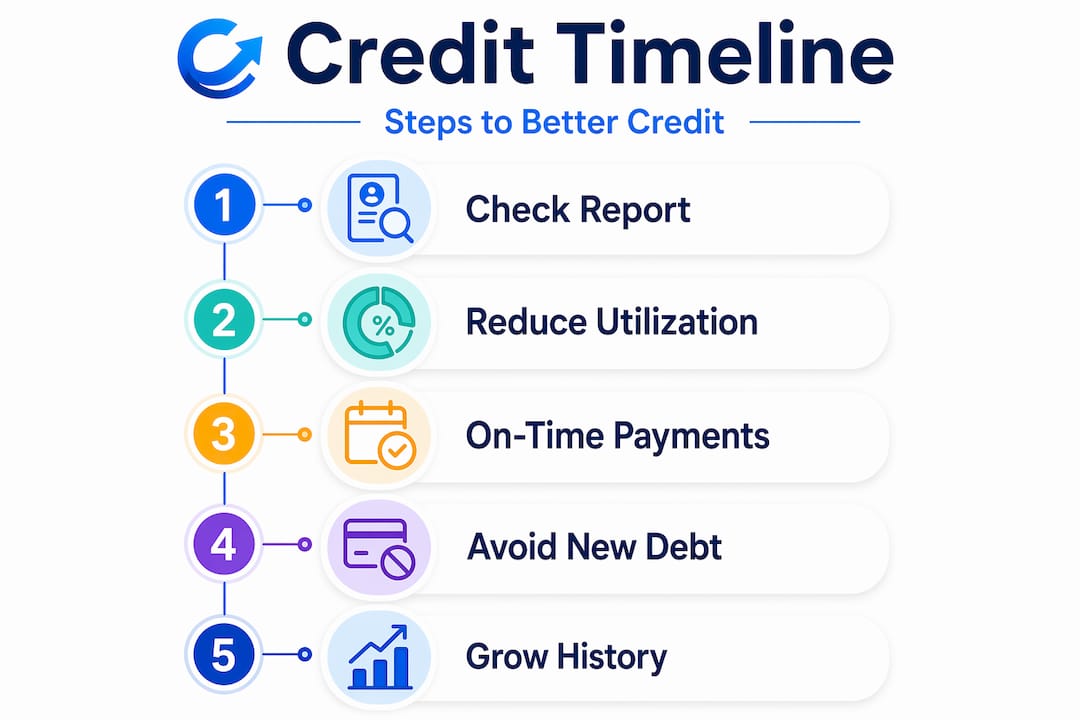
Once you know what to avoid, you can focus your energy where it actually moves the needle. These are the steps to improve credit score that consistently produce results when followed with discipline.
- Pay down revolving balances aggressively. Aim to get your utilization below 30% across all cards. If you can push it below 10%, even better. That single action can produce faster improvement than almost anything else.
- Set up autopay for every bill. Not just credit cards. Utilities, phone bills, and loans all matter. Automating prevents the one mistake that carries the heaviest penalty in the scoring model.
- Dispute every error you find. Pull your reports from all three bureaus and go line by line. If anything is wrong, file a dispute. Given that nearly half of all credit reports contain errors, there is a real chance you are losing points you should not be losing. Creditrebooter’s credit score repair resources walk you through how to do this effectively.
- Become an authorized user if you have the option. Find a trusted family member or close friend with a long-standing account in good standing and ask to be added. The account’s positive history can appear on your report and lift your score.
- Stop opening new accounts until your score stabilizes. Each new account lowers your average account age and triggers a hard inquiry. Unless you have a strategic reason, hold off.
- Give it time. This is the step no one wants to hear but every expert agrees on. Some factors in your score, specifically account age and the fading weight of older negative marks, only improve as months and years pass.
Creditrebooter’s steps to credit repair guide offers a structured approach to working through these in the right order.
Pro Tip: If reducing your balance in one lump sum is not realistic, try paying twice a month instead of once. Because utilization is typically captured at the statement close date, a mid-cycle payment can lower the balance that actually gets reported.
How major negative events change your recovery timeline
Late payments are one thing. Serious negative events operate on an entirely different scale and understanding their timeline is critical for anyone doing real credit score rebuilding after a crisis.
| Negative Event | Time on Credit Report | When Impact Starts to Fade |
|---|---|---|
| Late payment (30+ days) | 7 years | After 2-3 years with consistent positive behavior |
| Collection account | 7 years from original delinquency | After 3-4 years of positive accounts outweighing it |
| Chapter 7 bankruptcy | 10 years | After 4-5 years with rebuilt positive history |
| Chapter 13 bankruptcy | 7 years | After 3-4 years with consistent good behavior |
| Foreclosure | 7 years | After 3-4 years, especially with new positive tradelines |
Late payments and major derogatory marks remain on credit reports for 7 to 10 years, which explains the slow pace of credit recovery for people who have experienced serious financial hardship. The key insight here is that these marks do not stay equally damaging for their entire duration. A bankruptcy from four years ago matters far less than a bankruptcy from six months ago, even if both are still technically on your report.
The practical implication: if you are recovering from something serious, your job is to pile up as much positive history as possible around that negative mark. New on-time payments, low balances, and aging accounts will collectively dilute its impact, even before it falls off.
My take on patience in credit rebuilding
I have watched a lot of people go through credit repair, and the ones who struggle most are almost always the ones who treat their score like a leaderboard they need to top by next month. I get it. The stakes are real: a higher score means better loan rates, a shot at renting the apartment you want, or qualifying for that mortgage. The urgency feels legitimate.
But what I have seen consistently is this: the fastest path to real improvement is not an aggressive sprint. It is eliminating the mistakes that cost you points while putting consistent, boring positive behavior on autopilot. Autopay set up. Balances low. No new accounts. Report checked quarterly. That is it.
What trips people up most is a single missed payment after months of progress. Resetting the clock with one new late mark is the single biggest pitfall in credit recovery, and it is almost always avoidable. The emotional impulse to “do something more” often leads people to open a new card, close an old one, or pay a credit repair company for a service that does not legally do anything you cannot do yourself.
Celebrate the small wins. A 15-point gain after disputing an error is real progress. A clean billing cycle after a rough financial period is real progress. Credit improvement is a marathon because lenders require sustained evidence of stability, not a single good stretch. Give them that evidence, month after month, and the score will follow.
— Meagan
Start your credit recovery with the right support
Knowing what to do is one thing. Doing it consistently, without missing a step or falling into one of the traps that sets you back, is where most people need a hand.

Creditrebooter is built specifically for people at this stage. Whether you are recovering from bad credit or just looking to move your score into a stronger range, the bad credit repair resources on the site give you a structured path through disputes, error corrections, and healthy credit habits. The learning center covers everything from reading your credit report to understanding what lenders actually look for. If you want to stop guessing and start making real, documented progress, Creditrebooter’s tools and guidance put the process in your hands.
FAQ
How long does it take to improve your credit score?
Most people see modest improvements within 30 to 45 days from reducing utilization or disputing errors. Moving from poor credit (500s) to fair credit (600s) typically takes 6 to 12 months of consistent on-time payments and lower balances.
What factors most affect credit improvement speed?
Payment history and credit utilization together make up 65% of your credit score, making them the most influential factors in how quickly your score can improve with focused effort.
Why does credit take so long to improve after bankruptcy?
Chapter 7 bankruptcy stays on your credit report for 10 years, and Chapter 13 for 7 years. While the impact fades over time with sustained positive behavior, the timeline for meaningful recovery typically starts showing results after 3 to 5 years of consistent credit habits.
Can disputing errors really improve my credit score?
Yes, significantly. Nearly 44% of credit reports contain errors, and successfully disputing inaccurate late payment information can produce a score increase of 60 to 110 points once corrections are applied.
Does closing old credit cards help your credit score?
No. Closing old accounts reduces your total available credit and shortens your average account age, both of which lower your score. It is one of the most common mistakes people make during credit rebuilding.