Your credit score is not just a number lenders glance at when you apply for a mortgage. It shapes nearly every financial move you make, from renting an apartment to launching a small business. Many people assume credit only comes into play during big loan applications, but that misconception can cost you thousands of dollars and missed opportunities over your lifetime. Whether you are trying to buy a car, grow a business, or simply get a better deal on insurance, understanding why good credit matters puts you in control of your financial future.
Table of Contents
- What is good credit and how is it measured?
- The real-world impact of good credit
- Good credit for small businesses: Why it matters
- How to build and protect your credit
- Our take: What most guides miss about good credit
- Your next step: Get expert support for your credit journey
- Frequently asked questions
Key Takeaways
| Point | Details |
|---|---|
| Credit affects opportunities | Good credit impacts your ability to buy homes, cars, secure loans, and obtain better rates. |
| Separate business credit | For entrepreneurs, building business credit reduces personal liability and expands financing options. |
| Poor credit costs more | A low credit score does not block loans, but it raises costs and limits choices. |
| Proactive credit building | Taking regular action to improve and monitor credit gives you more financial flexibility. |
What is good credit and how is it measured?
Credit is a measure of how reliably you repay what you borrow. Lenders, landlords, and even some employers use this information to decide whether to work with you and on what terms. Your credit score is a three-digit number that summarizes your credit history, and it typically falls somewhere between 300 and 850.
The two most widely used scoring models are FICO and VantageScore. Both use the same 300 to 850 range, but they weigh factors slightly differently. Most lenders rely on FICO scores when making lending decisions. Here is how the FICO score ranges break down:
| Score range | Rating | What it means |
|---|---|---|
| 800 to 850 | Exceptional | Best rates and terms available |
| 740 to 799 | Very good | Above-average approval odds |
| 670 to 739 | Good | Near or above average; competitive rates |
| 580 to 669 | Fair | Limited options; higher rates likely |
| 300 to 579 | Poor | High-risk classification; tough approval |
A score above 700 is generally where you start seeing noticeably better loan terms, approval rates, and financial flexibility. Scores above 740 push you into territory where lenders actively compete for your business.
Five key factors determine your FICO score:
- Payment history (35%): Whether you pay on time, every time. This is the single biggest factor.
- Credit utilization (30%): How much of your available credit you are currently using. Keeping it below 30% is ideal.
- Length of credit history (15%): How long your accounts have been open. Older accounts help your score.
- Credit mix (10%): Having a variety of account types, such as credit cards, auto loans, and mortgages, shows responsible management.
- New credit (10%): How recently you have opened new accounts or applied for credit. Too many applications in a short period can lower your score temporarily.
Credit scores do not exist in a vacuum. Lenders also consider income, debt-to-income ratio, and industry in addition to credit scores. Your debt-to-income ratio, or DTI, compares your monthly debt payments to your gross monthly income. A high DTI can block approval even if your credit score is strong.
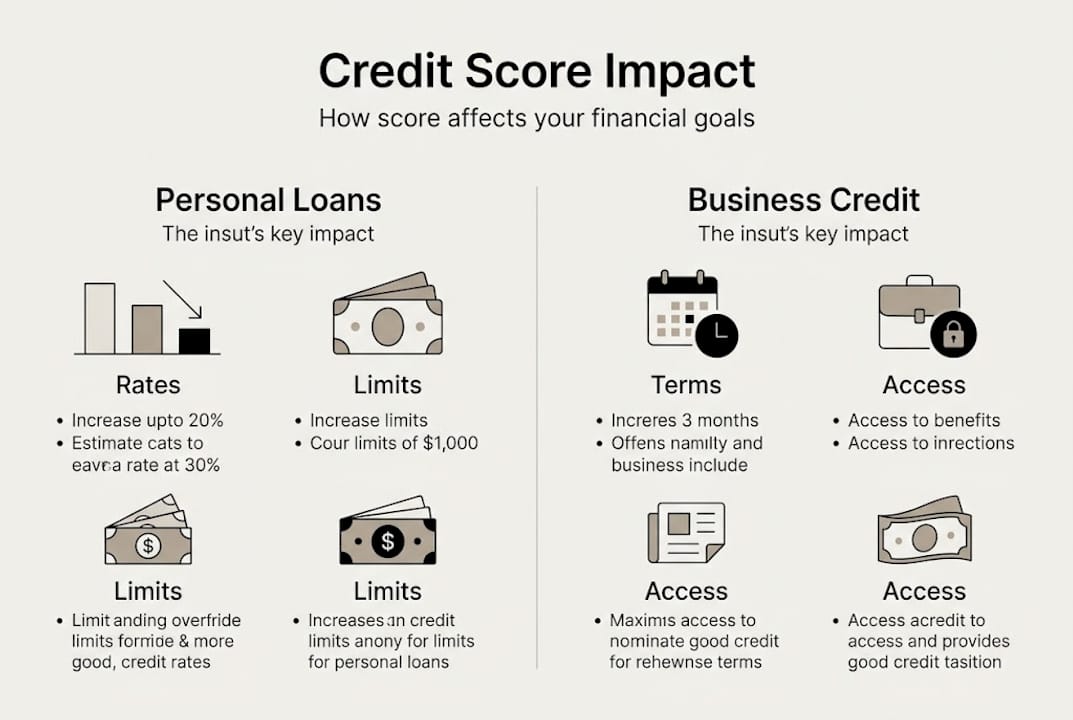
For individuals, credit scores primarily affect personal loans, mortgages, and credit cards. For small business owners, there is added complexity because both personal and business credit scores often come into play. Lenders evaluating a small business frequently look at the owner’s personal credit, especially in the early years of the business. Working on improving credit scores from both angles gives small business owners the strongest position possible.
The real-world impact of good credit
Now that you understand what good credit is, let’s see how it affects your real-world choices and costs. The difference between a good credit score and a poor one is not just about getting approved. It is about how much you pay over the entire life of a loan.
Consider a $30,000 auto loan over 60 months. A borrower with excellent credit might lock in a 5% interest rate, resulting in total interest paid of roughly $3,968. A borrower with poor credit could face a 15% interest rate on the same loan, pushing total interest to around $12,444. That is a difference of more than $8,000 on a single car loan. Multiply that kind of gap across a mortgage, business loan, and credit cards, and the total financial impact over a lifetime becomes staggering.
Here is a comparison of how credit quality affects common loan terms:
| Credit rating | Typical interest rate | Monthly payment ($30K auto loan, 60 months) | Total interest paid |
|---|---|---|---|
| Excellent (750+) | ~5% | ~$566 | ~$3,968 |
| Average (670 to 749) | ~9% | ~$623 | ~$7,360 |
| Poor (below 580) | ~15% | ~$714 | ~$12,444 |
Poor credit doesn’t preclude loans but results in higher costs and less favorable terms. That is worth repeating. You can still get financing with bad credit, but you will pay significantly more for it.
Three major financial goals that improve directly with good credit:
- Homeownership: A higher credit score can save you tens of thousands of dollars over a 30-year mortgage in lower interest costs alone.
- Starting or growing a business: Access to business loans, lines of credit, and vendor financing becomes far more realistic with a strong credit profile.
- Vehicle ownership: Better rates mean lower monthly payments and less total cost, keeping more money in your pocket each month.
Pro Tip: Credit affects more than just loans. Landlords run credit checks before approving rental applications. Utility companies may require security deposits from applicants with poor credit. Some employers check credit as part of hiring decisions, particularly for roles that involve financial responsibility. Strengthening your credit profile through credit improvement tips and applying smart credit building strategies helps you in all of these areas, not just when borrowing money.
Insurance companies in many states also use credit-based insurance scores to set premiums. Studies show that drivers with poor credit can pay significantly more for auto insurance than those with excellent credit, even with identical driving records. Good credit quietly works for you in the background across dozens of financial situations you may not have considered.
Good credit for small businesses: Why it matters
Individuals benefit from good credit, but so do business owners, often in ways most don’t expect. When you run a small business, your credit story becomes even more layered because you are managing two separate credit identities: your personal score and your business credit profile.
Business credit scores, such as those from Dun and Bradstreet, Experian Business, and Equifax Business, operate on different scales than personal scores. Dun and Bradstreet’s PAYDEX score, for example, runs from 0 to 100. These scores measure how reliably a business pays its suppliers and creditors. Strong business credit opens doors that personal credit alone cannot, including larger credit lines, better payment terms with vendors, and access to business-specific financing products.
Here is how strong business credit benefits small business owners:
- Easier access to financing: Banks and alternative lenders are more willing to approve business loans and credit lines at competitive rates when business credit is solid.
- Better vendor payment terms: Suppliers may extend net 30 or net 60 terms to businesses with good credit, freeing up cash flow instead of requiring immediate payment.
- Lower personal financial risk: When business credit is established separately, you reduce reliance on personal guarantees for every transaction.
- Business growth opportunities: Equipment leasing, commercial real estate, and large contracts often require proof of creditworthiness.
- Improved negotiating power: A strong credit profile gives you leverage when negotiating rates, contract terms, and financing packages.
Building business credit is one of the most strategic moves a small business owner can make. It separates your personal financial life from your business risks and positions your company for growth on its own merits.
New businesses or thin credit files may rely on personal scores; building business credit separates liability and improves terms over time. This means your early-stage business decisions about credit will follow you for years. Starting right matters more than most new entrepreneurs realize.
Pro Tip: Open a dedicated business bank account and apply for a business credit card as early as possible. Use it consistently and pay it on time. These simple steps begin building a business credit history that is separate from your personal finances, protecting both sides of your financial life.
Different industries also carry different risk profiles when it comes to business credit scoring. A restaurant may face stricter scrutiny than a consulting firm because of differences in revenue stability and default rates. Lenders and vendors who extend credit to businesses often apply industry-specific benchmarks when evaluating creditworthiness. Working on business credit solutions tailored to your industry can make a real difference in the terms you are offered.
How to build and protect your credit
Knowing why credit matters, here’s how you can strengthen and sustain it. The good news is that credit is not fixed. No matter where your score sits today, consistent positive actions will move it in the right direction. The challenge is patience. Most credit improvements take several months to fully show up in your score.
Five steps to maintain and grow good credit:
- Pay every bill on time: Set up autopay for at least the minimum on all accounts. A single missed payment can drop your score by 50 to 100 points.
- Keep credit utilization below 30%: If you have a $10,000 credit limit across your cards, try to keep balances under $3,000 total at any given time.
- Check your credit reports regularly: You are entitled to a free report from each of the three major bureaus annually. Review them carefully for errors or accounts you don’t recognize.
- Avoid opening multiple new accounts at once: Each application triggers a hard inquiry, which can temporarily lower your score. Space out new credit applications when possible.
- Keep older accounts open: Even if you don’t use an old credit card frequently, closing it can shorten your credit history and reduce available credit, both of which can hurt your score.
Common credit mistakes to avoid:
- Missing payment due dates, even by just a few days
- Maxing out credit cards, even if you pay them off monthly
- Ignoring credit report errors without disputing them
- Closing old accounts without understanding the impact on your score
- Co-signing loans without fully understanding your liability
Building and repairing credit is key to financial readiness and future opportunities. Whether you are an individual trying to qualify for a mortgage or a business owner looking to expand, the same principle applies: proactive credit management keeps options open.
Pro Tip: Set a calendar reminder every three to four months to review your credit report. If you spot an error, dispute it immediately in writing with the relevant credit bureau. Errors on credit reports are more common than people expect, and even a small inaccuracy can suppress your score by meaningful points. Explore repairing credit tricks that help you address issues faster, and learn about avoiding bad credit before problems compound.
For business owners, the same discipline applies on the business side. Pay suppliers and creditors on time to build your PAYDEX score. Use business credit products responsibly. Keep personal and business finances entirely separate to avoid confusion and unintended credit mixing.
Our take: What most guides miss about good credit
Most credit guides focus heavily on loan interest rates, and that is important, but it represents only part of the picture. The real power of good credit lies in what it does for your flexibility and your sense of security.
When your credit is strong, you can say yes to opportunities quickly. You can move on a house before competing buyers. You can finance equipment to take on a larger contract. You can negotiate confidently with vendors because you have the credit to back your commitments. Poor credit doesn’t just cost you money in interest. It narrows your choices and forces reactive decisions instead of strategic ones.
What we have seen over and over again is that people and business owners who treat credit as a living, breathing asset outperform those who only think about it when they need a loan. Credit is infrastructure. Just like you maintain your vehicle or your business software, you should maintain your credit actively.
One thing that truly separates financially confident people from financially stressed ones is the separation of personal and business credit. Business owners who blend the two often find themselves personally exposed when business challenges arise. Understanding the credit pitfalls to avoid before you find yourself in trouble is far easier than fixing damage after the fact. Build proactively, protect consistently, and treat credit as the asset it really is.
Your next step: Get expert support for your credit journey
If today’s article opened your eyes to how much your credit score influences your life, you are already ahead of most people. The challenge is knowing what to do next, especially if your credit needs significant work or if you are starting a business and have no idea where to begin.
At Credit Rebooter, we work with individuals and small business owners to repair, rebuild, and strengthen credit profiles. Whether you need to clear up issues with a credit repair collection agency, want to start building credit history from the ground up, or want to understand warning credit repair signals you should watch for, we have the resources and expert guidance to support you. Take the next step today and explore what better credit can do for your future.
Frequently asked questions
How can I check and monitor my credit score?
You can check your credit score for free through the major credit bureaus or online services, and monitoring regularly helps you catch errors and fraud early. Lenders use scores from credit bureaus as a primary criterion when evaluating applications.
Can business owners use their personal credit to secure financing?
Yes, new businesses often rely on personal credit for early financing, but building business credit separates liability and unlocks better terms as your business grows.
Does poor credit make it impossible to get a loan?
No, poor credit doesn’t preclude loans from being available, but you will pay higher interest rates and face a tougher approval process than borrowers with strong scores.
What are the fastest ways to improve my credit?
Paying bills on time, lowering your credit utilization below 30%, and reviewing your credit reports for errors are the quickest and most effective ways to improve your score.
Why do business credit scores vary by industry?
Different industries carry different risk levels and revenue patterns, and industry affects business scores and the lending terms extended to businesses operating within them.