Your business revenue is growing, invoices are going out, and customers are paying. Yet when you apply for a business loan or try to open a vendor account, you get denied or offered rates that feel punishing. The culprit is often your business credit profile, and the factors dragging it down are not always obvious. Small shifts in payment timing, overlooked public records, or a rising debt load can quietly damage your credit standing long before your bank account shows any warning signs. This guide walks you through every major factor affecting business credit, with practical steps you can act on today.
Table of Contents
- Understanding business credit and why it matters
- Payment history: The cornerstone of business credit
- Outstanding debts and credit utilization ratios
- Legal records, public filings, and business background
- Steps to strengthen and monitor business credit
- What most guides miss about business credit
- Take your business credit to the next level
- Frequently asked questions
Key Takeaways
| Point | Details |
|---|---|
| Payment history matters most | Late or early payments can significantly impact your business’s credit score. |
| Debt ratios signal risk | Keeping credit utilization under 30% is vital for optimal lending terms. |
| Legal filings affect trust | Bankruptcies and liens can sharply decrease your business credit. |
| Monitoring prevents surprises | Regularly checking your credit profile helps catch issues before they hurt financing options. |
Understanding business credit and why it matters
Business credit is a financial profile that reflects how reliably your company manages its financial obligations. Credit bureaus like Dun & Bradstreet, Experian Business, and Equifax Business compile data from lenders, vendors, and public records to build that profile. The result is a score that lenders, suppliers, and even potential partners use to evaluate your company’s trustworthiness.
Many entrepreneurs assume their personal credit score covers their business. It does not. Business credit is a separate file tied to your company’s Employer Identification Number (EIN), not your Social Security number. That separation is actually a major advantage when you build it correctly, because it protects your personal finances and gives your business its own borrowing power.
Why does it matter in practice? Business credit influences loan eligibility, rates, and vendor relationships, which means a strong profile directly expands your options and reduces your cost of capital. Weak business credit, on the other hand, can force you into high-interest financing or require personal guarantees that put your own assets at risk.
Here is what a solid business credit profile unlocks for you:
- Lower interest rates on business loans and lines of credit
- Net-30 or Net-60 vendor terms that improve your cash flow
- Higher credit limits without requiring personal guarantees
- Greater negotiating power with suppliers and partners
- Faster approval on equipment financing or commercial leases
One common misconception is that simply operating a business builds credit automatically. It does not. You have to actively open accounts that report to business credit bureaus and manage them strategically. Learning about building credit history early in your business journey puts you ahead of most competitors. Understanding credit score ratings also helps you set realistic targets and measure progress accurately.
With the foundation set, we move to the most influential single factor in business credit.
Payment history: The cornerstone of business credit
No factor shapes your business credit profile more than how consistently and promptly you pay your obligations. Every vendor invoice, loan installment, and credit card bill creates a data point that credit bureaus collect and analyze. Pay early or on time, and those data points work in your favor. Pay late, and the damage accumulates faster than most business owners realize.
One of the most important metrics in this area is Days Beyond Terms (DBT), which measures how many days past the agreed payment deadline a payment was made. A DBT of zero means you paid exactly on time. A DBT of 10 means you paid 10 days late. Even a modest and consistent rise in DBT is a red flag. DBT trends predict cash flow issues; rising DBT signals distress before other indicators catch up. That means lenders and suppliers may pull back before your score even drops significantly.
| Payment behavior | DBT range | Credit impact |
|---|---|---|
| Paid early | Negative DBT | Very positive |
| Paid on time | 0 | Positive |
| Slightly late | 1 to 10 | Mild negative |
| Moderately late | 11 to 30 | Moderate negative |
| Severely late | 30 or more | Severe negative |
Even two or three late payments in a quarter can noticeably reduce your business credit score, especially if your profile is still thin. The bureaus weight recent behavior heavily, so a pattern of late payments in the last six months does more damage than an old isolated incident.
Strategies to strengthen your payment history:
- Set up automatic payments for recurring vendor bills and loan installments
- Pay invoices before the due date whenever cash flow allows, since early payment can generate positive DBT data
- Review your building credit history strategy to ensure you are opening accounts that actually report to business bureaus
- Communicate proactively with vendors if a payment will be delayed, since some may adjust terms without reporting a late payment
Pro Tip: Ask your key vendors whether they report payment data to business credit bureaus. Many small suppliers do not, which means your on-time payments go unrecorded. Prioritize opening accounts with vendors who do report, so every prompt payment counts toward your profile.
Now, let’s examine the role of outstanding debts and leverage.
Outstanding debts and credit utilization ratios
Your total debt load matters, but how you use your available credit lines matters just as much. Credit utilization is the ratio of your current balances to your total credit limits. It is one of the clearest signals lenders use to judge whether your business is living within its means or stretched thin.

High credit utilization signals risk to lenders and reduces business credit scores, even if you are making all your payments on time. The general rule is to keep utilization below 30% on any individual credit line and across your total available credit. Staying under 20% is even better if you are actively trying to improve your profile.
| Utilization range | Risk perception | Score impact |
|---|---|---|
| Under 20% | Low risk | Very positive |
| 20% to 30% | Acceptable | Neutral to positive |
| 31% to 50% | Moderate risk | Mild negative |
| Over 50% | High risk | Significant negative |
Here is how to actively manage your debt ratios:
- Pay down balances on revolving credit lines before statement closing dates, not just before due dates
- Request credit limit increases on existing accounts to lower your utilization ratio without taking on new debt
- Consolidate high-balance accounts into a single installment loan, which is treated differently than revolving credit
- Avoid closing old accounts even if you rarely use them, since open accounts with low balances improve your overall utilization ratio
- Spread purchases across multiple credit lines rather than maxing out one card or vendor account
Understanding your credit report score in detail helps you see exactly which accounts are dragging your utilization up. You can also explore strategies for building credit and stopping creditors from eroding the progress you make.
Pro Tip: Run a quick utilization check every month. Add up all your current balances, divide by your total credit limits, and multiply by 100. If that number is above 30%, focus on paying down the highest-utilization accounts first before applying for any new financing.
Let’s explore how public records and business background impact credit evaluations.
Legal records, public filings, and business background
Your business credit profile is not just about how you pay bills. It also reflects your company’s legal and structural history. Public records are pulled directly from court filings, government databases, and regulatory agencies, and they can weigh heavily on your credit standing.
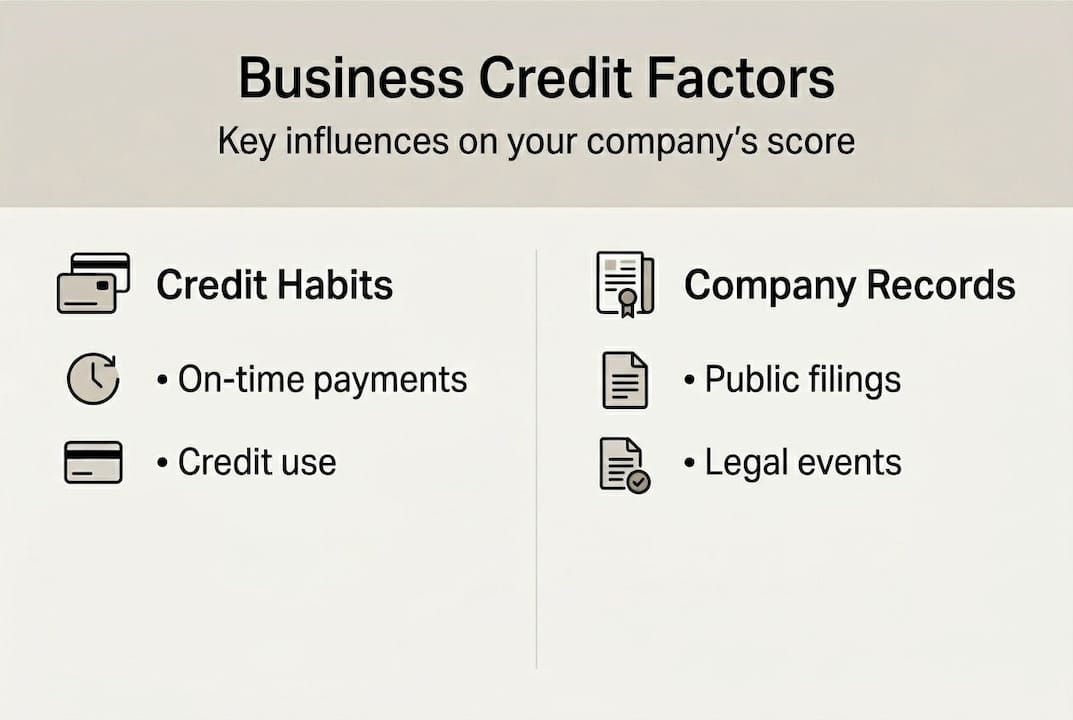
Bankruptcies, tax liens, and legal actions are weighted heavily by credit bureaus, often more than a few late payments. A bankruptcy filing can remain on a business credit report for up to seven years. A tax lien from the IRS or a state tax authority signals serious financial instability to any lender reviewing your file.
The most damaging public records include:
- Bankruptcy filings (Chapter 7 or Chapter 11)
- Federal and state tax liens
- Judgments from civil lawsuits
- UCC filings that indicate secured creditors have claims on your assets
- Collections accounts sent to third-party agencies
Beyond legal records, your business background itself plays a role. Older businesses generally receive higher credit scores because longevity signals stability. A company incorporated as an LLC or corporation is treated more credibly than a sole proprietorship, partly because the legal separation between owner and business is clear.
A business that has operated for five or more years, maintains clean public records, and holds proper incorporation status starts every credit application from a position of strength.
You can monitor your credit report and score regularly to catch any unexpected filings or errors in your public record data. Reviewing your credit score breakdown helps you understand exactly how much weight each category carries in your overall profile.
To round out the framework, let’s look at practical steps for improving your business credit.
Steps to strengthen and monitor business credit
Knowing what affects your business credit is only useful if you act on that knowledge. Building a stronger profile is a process, not a one-time fix. The good news is that consistent, deliberate actions produce measurable results within a few months.
Start by pulling your business credit reports from all three major bureaus. Errors are more common than most business owners expect, and a single incorrect late payment or erroneous lien can suppress your score unfairly. Regular monitoring and addressing discrepancies is essential for maintaining accurate business credit profiles.
Here is a practical action plan:
- Pull reports quarterly from Dun & Bradstreet, Experian Business, and Equifax Business
- Dispute errors in writing with documentation, and follow up until corrections are confirmed
- Open vendor accounts with suppliers who report to business bureaus and pay them early
- Apply for a business credit card from a bank or credit union that reports to business bureaus
- Register your business properly with a DUNS number and ensure your address and contact details are consistent across all filings
Ongoing monitoring habits also matter:
- Set a calendar reminder every 90 days to review all three business credit reports
- Track your DBT trend monthly, not just your score
- Use alerts from credit monitoring services to catch new inquiries or filings immediately
- Review your what is a credit report score resource to stay current on how scores are calculated
- Build a relationship with vendors and lenders who can provide positive trade references
Focusing on improving your credit score through these consistent habits compounds over time. Each quarter of clean payment data, low utilization, and error-free records adds credibility to your profile.
Having explored actionable strategies, let’s share a fresh perspective on what really moves a business credit score and what many guides miss.
What most guides miss about business credit
Most articles about business credit focus on scores. Check your score, raise your score, chase a better score. That framing is too narrow, and it leads business owners to optimize the wrong things.
The real insight is that DBT trend analysis is a leading indicator, often more actionable than reviewing just scores. A business can hold a stable credit score while its DBT creeps upward month by month. By the time the score drops, lenders and suppliers have already noticed the trend and started pulling back.
Vendor relationships are another underrated dimension. A supplier who reports your payments to credit bureaus is a credit-building partner. Losing that relationship, even for non-financial reasons, can remove a stream of positive data from your profile. Protecting those relationships is part of your credit strategy.
We also see business owners focus intensely on building credit history while ignoring the monitoring side. Opening new accounts is useful, but if errors or fraudulent filings appear in your report and go unnoticed for months, they can erase the progress you worked hard to build. Strategic monitoring, combined with a clear plan for improving your credit score, is what separates businesses that grow their credit from those that spin their wheels.
Take your business credit to the next level
Understanding the factors that shape your business credit profile is the first step. Turning that knowledge into real score improvements requires the right tools, guidance, and consistency.

At Credit Rebooter, we have built a full library of credit building strategies designed specifically for small business owners who want to grow their financing options. Before you sign up for any service, read our honest credit repair warning so you know exactly what to expect and what to avoid. If you are ready to start laying the groundwork, our guide on building credit history gives you a clear, step-by-step path forward. Your business credit is a long-term asset. Start treating it like one.
Frequently asked questions
How quickly can improving payment history affect business credit?
Positive changes in payment history can reflect in business credit scores within a few reporting cycles, often in 60 to 90 days. DBT changes impact cash flow perception and scores rapidly, so consistent on-time payments produce faster results than most business owners expect.
Does a business credit check include personal credit?
Business credit is a separate file, but lenders may evaluate personal credit alongside business scores, especially for newer businesses that have not yet built a substantial credit history.
What legal records are most damaging to business credit?
Bankruptcies, tax liens, and legal actions are weighed most heavily by credit bureaus and can severely lower your business credit score, sometimes remaining on your report for up to seven years.
How often should I monitor my business credit report?
At minimum, review your business credit reports quarterly. Routine checks are essential for catching errors, unauthorized filings, or early warning signs of identity fraud before they do lasting damage.